The hard water ads that convert name the homeowner's area, point to one problem they can see or feel (spots, scale, dry hair, stained fixtures) and offer a clear next step like a free in-home water test. Keep claims cosmetic, skip fear and health language, and test angles one at a time.
Every water treatment dealer runs some version of "Do you have hard water?" Most of those ads look the same, say the same thing and get scrolled past. The ones that book appointments are more specific. They pick one angle, aim it at one area and get to the offer fast.
This post lays out eight hard water ad angles we use as starting points, how to write each one and what to keep out of your copy so Meta approves it and homeowners trust it.
What makes a hard water ad convert?
A hard water ad converts when the homeowner instantly recognizes their own problem and sees a clear, low-effort next step. Three pieces carry most of the weight:
- A local callout. "Homeowners in [City]..." stops the scroll better than a generic headline because it feels like it was made for them.
- One specific problem. Spots on glasses, crusty showerheads, dull laundry. Pick one per ad.
- An offer up front. We put the offer inside the first 125 characters of text and the first 5 to 8 seconds of video. If people have to read three paragraphs to find out what you are offering, most never get there.
Everything else is supporting detail. If the opening line does not land, the rest of the ad does not matter.
Which hard water ad angles work best?
The best angles are the ones tied to a daily annoyance the homeowner already complains about. Here are eight we test across accounts.
1. The spotty dishes angle
"[City] homeowners: still hand-drying glasses because the dishwasher leaves spots?" Everyone has seen cloudy glasses. It is relatable and visual.
2. The crusty fixtures angle
"White crust on your faucets and showerheads?" Close-up footage of scale on a faucet is one of the most recognizable images in this industry.
3. The cleaning time angle
"Scrubbing the same shower door every week?" This speaks to whoever does the cleaning and frames soft water as time back.
4. The hair and skin feel angle
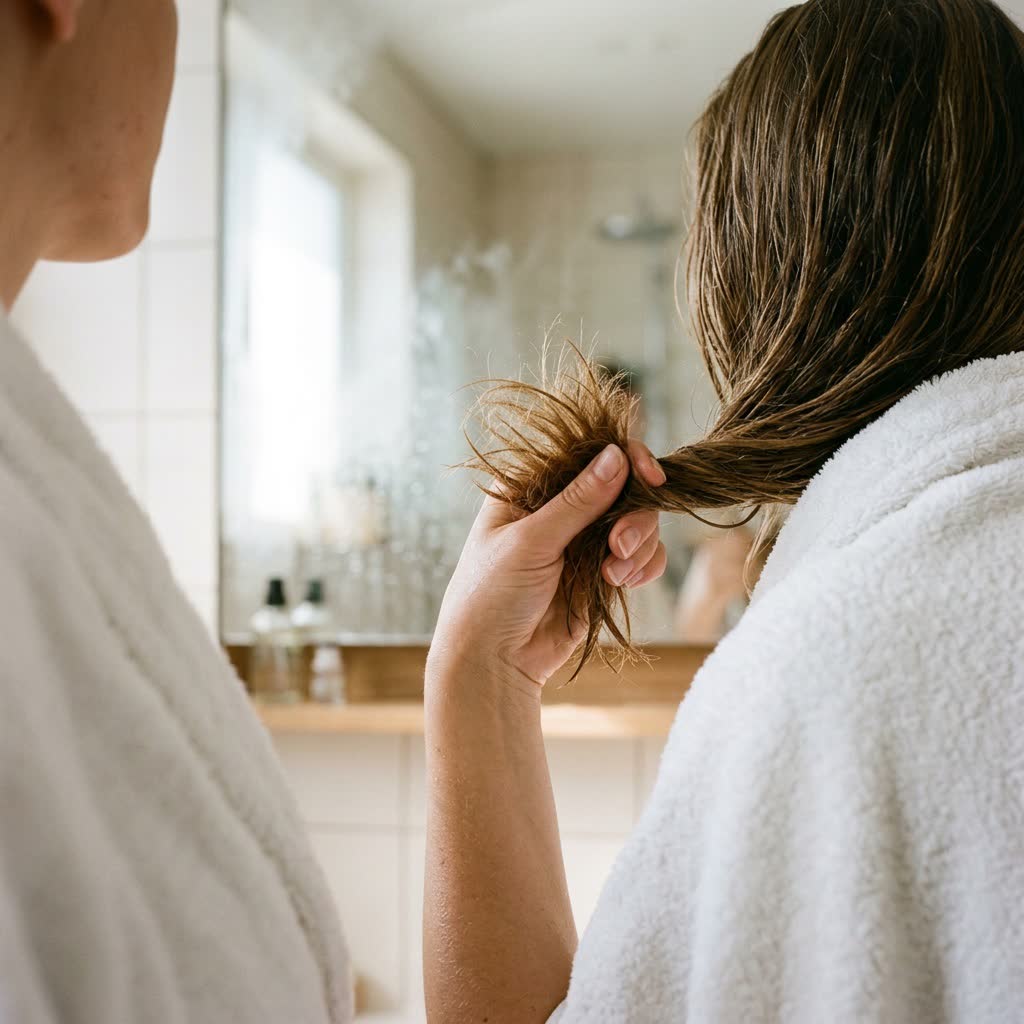
"Hair feel dry and straw-like after every shower?" This works well, as long as you keep it about feel and comfort, not a skin condition.
5. The appliance angle
"Scale building up inside your water heater and dishwasher?" Frame it around buildup and upkeep. Do not invent lifespan numbers you cannot back up.
6. The laundry angle
"Whites turning gray no matter what detergent you buy?" Good for audiences who have already tried every product on the shelf.
7. The bottled water angle
"Still hauling cases of bottled water home?" Pairs naturally with reverse osmosis if you sell it, and leads with taste, not fear.
8. The free water test angle
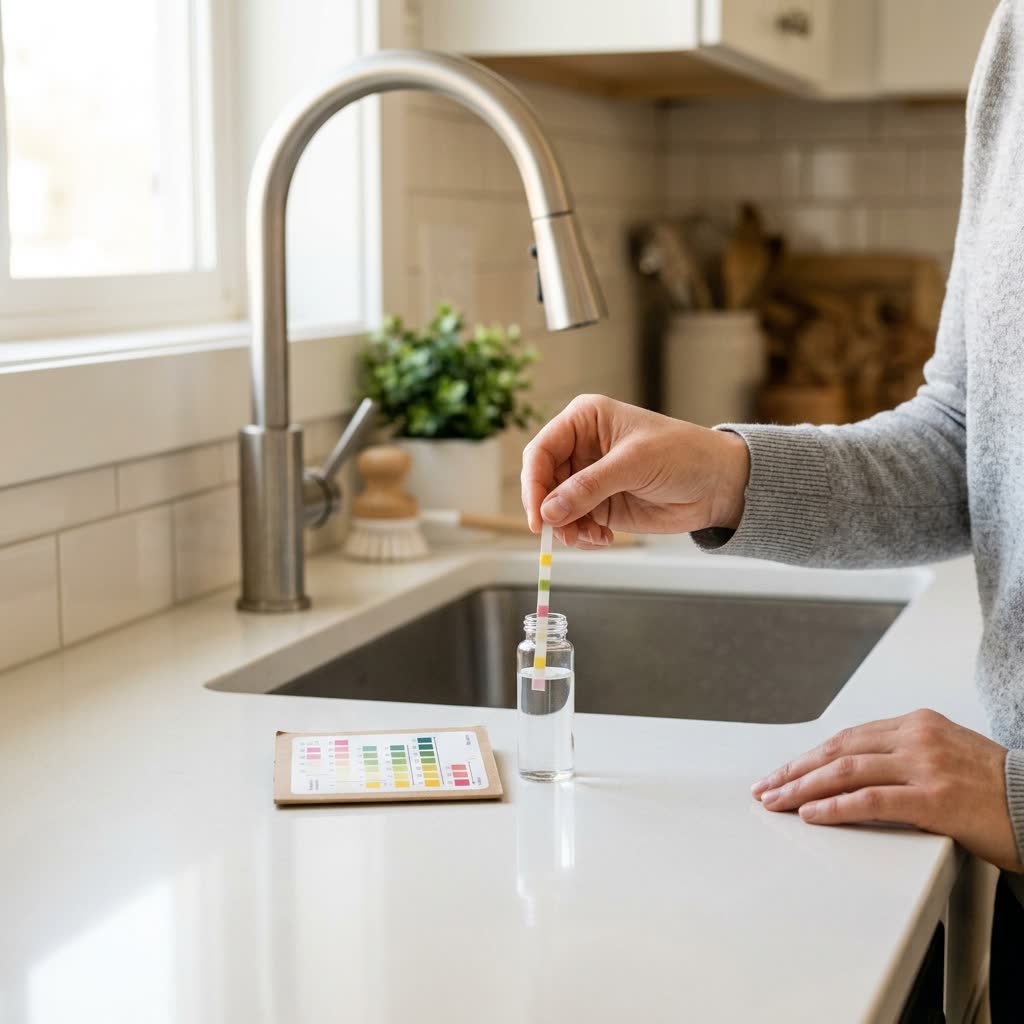
"Find out how hard your water is. Free in-home test for [City] homeowners." This is the most direct version and often the base offer behind the other seven. We cover how to keep it from attracting tire-kickers in free water test offers.
Which claims should hard water ads avoid?
Avoid any claim about health, disease, toxins or danger. Hard water is a cosmetic and household problem, and that is how it should be sold in an ad. Here is a quick reference:
| Say this | Not this |
|---|---|
| "Spots on your glasses" | "Toxic film on your glasses" |
| "Hair feels dry after showering" | "This will fix your skin problems" |
| "Scale buildup on fixtures" | "Your water is poisoning your home" |
| "Free in-home water test" | "Only 3 spots left today" |
| "Your local water treatment team" | "Better than [competitor brand]" |
A few more rules we follow:
- No fake urgency. If there is no real deadline, do not invent one.
- No fake customers. No AI-generated "testimonials" or made-up reviews.
- No competitor names. Talk about your company, not theirs.
- Only show what you sell. If you install salt-free conditioners only, do not show a brine tank.
These rules keep ads approved, but they also protect the sale. A homeowner who booked because of a scare tactic shows up skeptical. A homeowner who booked because their faucets are crusty shows up ready to fix the crust.
What format should hard water ads use?
Video usually does the heavy lifting, with static images as a supporting test. In our accounts, owner-on-camera video books best by far. Between July and October 2026, on roughly $83k of spend, AI-avatar talking heads ran about $54 per lead while real b-roll with a voiceover ran about $28.
That gap tells you something about hard water ads specifically: homeowners want to see real scale, real fixtures and a real person from a local company. A simple phone video of the owner holding a scaled-up showerhead and saying "If you're in [City], this is what your water is doing to your fixtures" can beat a polished production. More on that in what video ads work best for water treatment.
For statics, use a single strong visual (scale on a faucet, spots on a glass) with the area and offer in the image text.
Whatever the format, match the angle to the visual. A spotty dishes hook should open on a cloudy glass, not a wide shot of a kitchen. A crusty fixtures hook should open on the crust. When the first frame and the first line say the same thing, the homeowner gets the point in a second, and that first second is what decides whether they keep watching or keep scrolling. Mismatched hooks and visuals are one of the most common reasons a good angle looks like a loser in testing.
How do you test hard water ad angles without wasting budget?
Test a few angles at a time, judge them on booked appointments and kill losers quickly. A simple process:
- Pick two or three angles from the list above.
- Write one hook per angle and keep the offer the same across them so the angle is the only variable.
- Run them in the same ad set so Meta can push spend toward what is working.
- After enough spend to see a pattern, compare cost per lead and, more importantly, cost per booked appointment.
- Keep the winner, swap a new angle in for the loser and repeat.
The targets we work toward: cost per lead around $20 to $30 with an alarm above $50, and cost per booked appointment around $80 with an alarm above $100. An angle that gets cheap leads but books poorly is not a winner. We break down these numbers in water treatment cost per lead benchmarks.
What if two dealers in the same market use the same angle?
Then neither ad stands out. If you are working with any partner who runs ads for more than one company in your market, make sure your creative is never identical to someone else's. Same angle can be fine. Same video, same words, same thumbnail is not.
This is one reason we keep leads exclusive with one dealer per territory. Your ads are built for your area, your equipment and your offer. If you want us to build and test these angles for your territory, with setters booking the appointments onto your calendar, book a call.
The bottom line
Hard water ads convert when they are specific. Call out the area, pick one problem the homeowner sees every day, put the offer up front and keep the claims cosmetic. Test a few angles at a time, judge them by booked appointments and keep refreshing the hooks on the ones that work.