In our accounts, owner-on-camera video books best by far, followed by real b-roll with voiceover. AI avatar talking heads ran roughly double the cost per lead of b-roll plus voiceover ($54 vs $28 on about $83k of spend). Whatever the format, lead with a local callout and get the offer into the first 5 to 8 seconds.
Video is where most water treatment ad budgets go, and it is where most of the waste happens too. The wrong format can double what you pay for a lead before anyone even picks up the phone.
Here is what we see in our own accounts running Facebook and Instagram ads for water treatment dealers, which formats book appointments, and how to structure a video so the right homeowners raise their hand.
What type of video ad works best for water treatment?
In our accounts, owner-on-camera video books best by far. A dealer or owner standing in a real home, talking plainly about hard water, spots and scale, beats every other format we run.
It works for a simple reason. Homeowners are inviting someone into their house. Seeing the actual person, or at least the actual company, before that visit lowers the guard. A real face with a local accent does more than any script.
Owner video does not need to be fancy. Phone footage, good light and one clear message is enough. What matters is that it looks like a real local business, because it is one.
Do AI avatar ads work for water treatment?
Not well, in our experience. AI avatar talking heads ran roughly double the cost per lead of real b-roll with voiceover in our accounts: $54 versus $28, on about $83,000 of spend from July through October 2026.
That gap is big enough to matter. At $54 a lead you are over our alarm line of $50 before a single call is made. At $28 you are inside our $20 to $30 target. See our post on water treatment cost per lead benchmarks for how that flows through to cost per booked appointment.
Our read is that people can tell. A synthetic presenter talking about their tap water feels off, and trust is the whole game when you are asking to come inside someone's home.
How do the main video formats compare?
Here is how the formats we run stack up, based on what we see in our accounts:
| Format | What it looks like | How it performs for us |
|---|---|---|
| Owner on camera | Dealer talks directly to camera in a home or showroom | Books best by far |
| Real b-roll + voiceover | Close-ups of spots, scale, stains, installs, with a voice explaining | Strong, around $28 per lead in our test window |
| AI avatar talking head | Synthetic presenter reading a script | Roughly double the cost per lead, around $54 |
| Static image | Single photo with text | We use it as a supporting format next to video |
If you cannot get the owner on camera yet, real b-roll with a clear voiceover is the next best thing. Shoot your own installs, your own customers' fixtures (with permission), your own trucks.
What should the first 5 seconds of a water treatment video say?
The first 5 to 8 seconds should name the area and state the offer. That is the window where people decide to keep watching or scroll past.
A strong opening does three things fast:
- Calls out the area. "St. Louis homeowners" or "If you live in Chesterfield" stops locals because it is clearly about them.
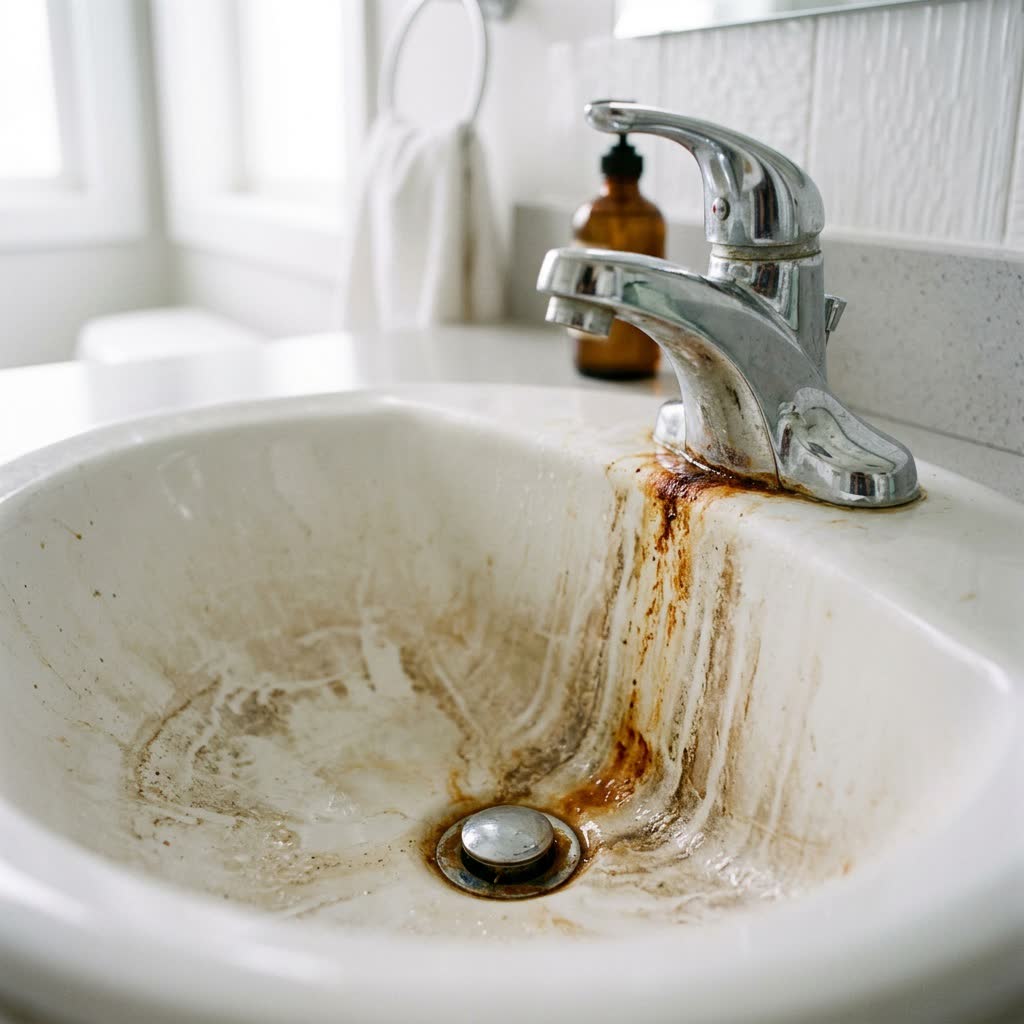
- Shows a problem they recognize. White crust on the faucet, spots on glasses, an orange ring in the toilet.
- Names the offer. A free in-home water test, a free estimate, whatever you actually provide.
The same rule applies to the text above the video. Put the area and the offer in the first 125 characters, before the "see more" cut. Many people never tap to expand.
What problems should water treatment video ads focus on?
Stick to cosmetic, visible problems homeowners already notice. These are the angles we use:
- Spots and film on dishes and glasses
- Scale on faucets, showerheads and glass doors
- Rust or orange stains in sinks, tubs and toilets
- Rotten egg or chlorine smell from the tap
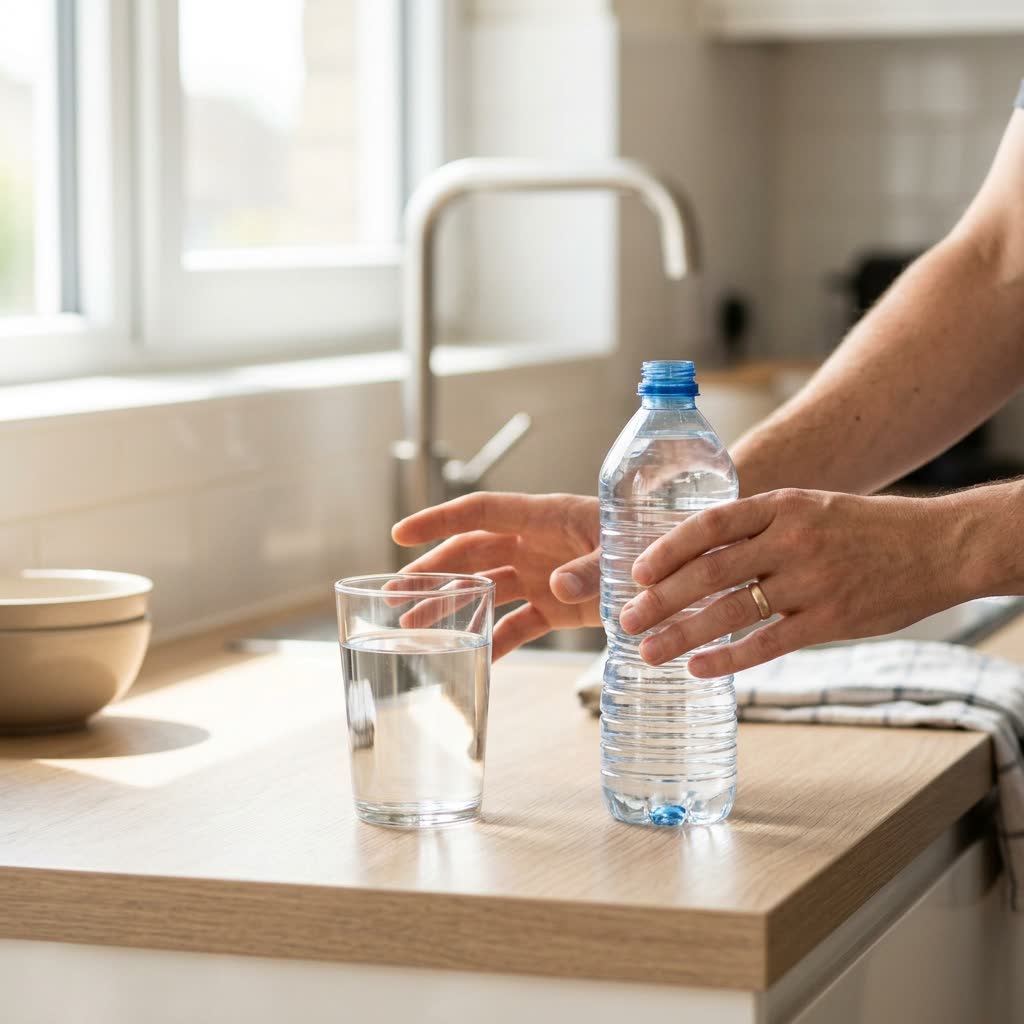
- Water that tastes off, so the family buys bottled water
- Skin and hair that feel dry after a shower
Avoid health, disease and fear-based claims. They create policy problems on Meta and they erode trust. A homeowner who scrubs scale off the shower every weekend does not need to be scared. They need to know there is a fix and that someone local can show them. For more angles that stay on the right side of the line, see hard water ad angles that convert.
How do you structure a water treatment video ad?
A simple four-part structure covers most of what we run:
- Hook (0 to 5 seconds): Area callout plus the visible problem. "Chesterfield, if your shower door looks like this..."
- Offer (by 8 seconds): What they get and that it is free or low commitment.
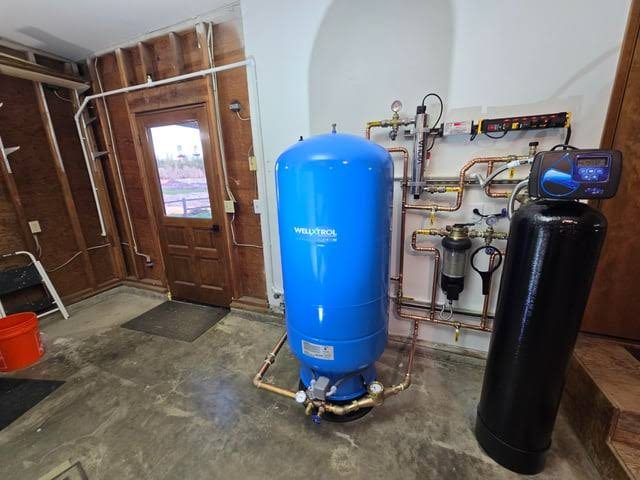
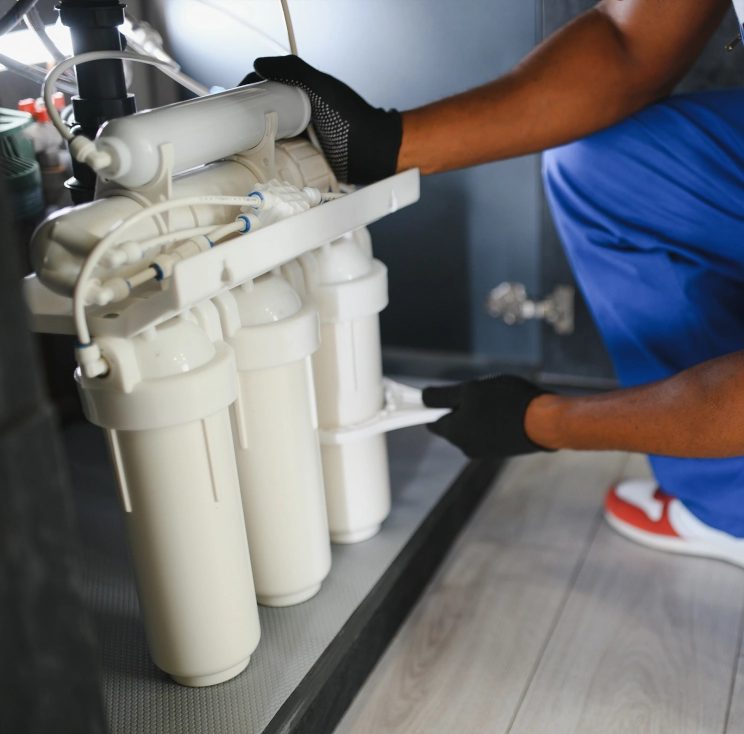
- Proof of reality (middle): Real equipment you sell, a real tech, a real install. Show only gear you actually offer.
- Clear next step (end): Tap the button, answer a few questions, and someone will call to set a time.
Keep the end card simple: your logo, your offer, and the action. Do not cram in five selling points.
What video ad mistakes waste the most money?
The same few mistakes show up again and again:
- Burying the offer. If it shows up at second 20, most people never see it.
- Generic stock footage. Clips that could be from anywhere tell homeowners you could be anyone.
- Showing equipment you do not sell. If you only install salt-free systems, do not show brine tanks.
- Fake testimonials. Actors or AI pretending to be your customers break trust and platform rules. Never do it.
- Fake urgency. "Only 3 spots left" when it is not true. People can smell it.
- Running one ad until it dies. Every ad wears out in a local market. Keep fresh versions ready.
How often should you refresh water treatment video ads?
Refresh when cost per lead starts climbing and stays up, not on a fixed calendar. In a local territory the same people see your ads over and over, so even a great video eventually tires out.
The easiest way to stay ahead is to shoot in batches. One afternoon with the owner can produce several hooks on the same body: different opening lines, different problems up front, different locations in the house. Swap the first five seconds and you have a new ad without starting from scratch.
Also keep creative distinct between dealers who share a market. Two companies running near-identical videos in the same area just bid against each other and burn out faster.
Who should make your video ads?
You can shoot them yourself, or have the people running your ads handle it. What matters is that someone is testing hooks, watching cost per lead and swapping creative before it goes stale.
When we run ads for a dealer, that is part of the job. Ads run in your own ad account, our setters call every lead fast and book confirmed appointments on your calendar, and each territory goes to one dealer only. We guarantee 80 booked estimates in the first 30 days, or we keep working free until you get them, in writing. If that sounds useful, book a call.
Bottom line
Real beats synthetic. Owner-on-camera video books best in our accounts, real b-roll with voiceover is a strong second, and AI avatars cost roughly twice as much per lead. Whatever you run, call out the area and state the offer in the first few seconds, show only real cosmetic problems and equipment you sell, and keep fresh hooks in the pipeline.