For most water treatment dealers chasing in-home appointments, Meta instant forms are the better starting point because they keep homeowners inside Facebook or Instagram and cut friction. The trade-off is lead quality, which you fix with a few qualifying questions and fast phone follow-up, not by sending people to a slower page.
Every dealer running Facebook and Instagram ads hits the same fork in the road. Do you collect leads with Meta's built-in instant forms, or send people to a landing page on your own site?
Both work. They just work differently, and the right choice depends on what you are trying to fill: a calendar of in-home appointments, or a list of people who want to read about water treatment. Here is how we think about it.
What is the difference between instant forms and landing pages?
An instant form opens inside Facebook or Instagram and is often pre-filled with the person's name, email and phone, so they can submit in a few taps. A landing page sends them out of the app to your website, where they read and fill out a form there.
That one difference drives everything else. Instant forms remove friction. Landing pages add it, on purpose or not.
| Instant form | Landing page | |
|---|---|---|
| Where it opens | Inside Facebook or Instagram | Your website, in a browser |
| Contact fields | Often pre-filled | Typed by hand |
| Load speed | Near instant | Depends on your site |
| Lead volume | Usually higher | Usually lower |
| Lead intent | Mixed, needs qualifying | Often higher per lead |
| Room to explain | Limited | As much as you want |
| Setup effort | Low | Higher: design, hosting, tracking |
Which is better for water treatment leads?
For in-home water treatment appointments, instant forms are usually the better starting point. Our setup is built around them.
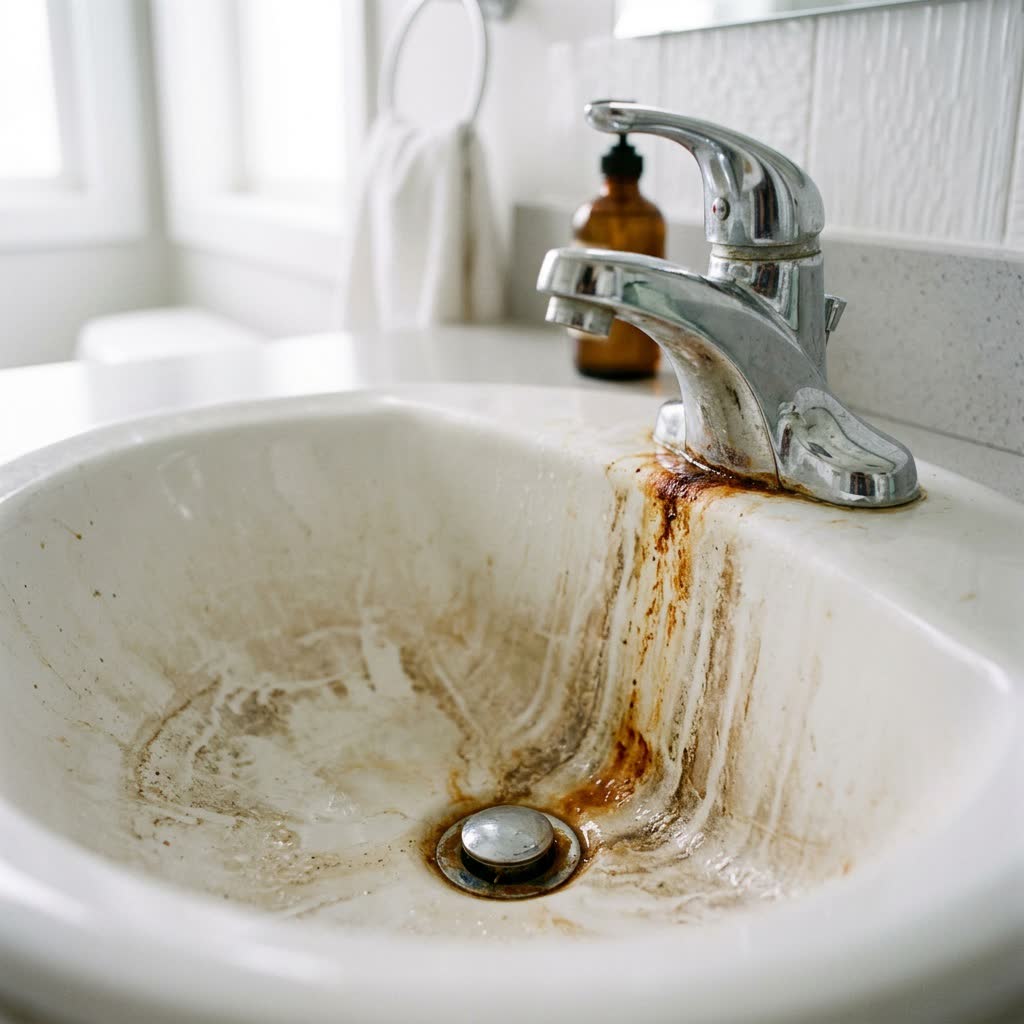
The reason is simple. A homeowner scrolling at night sees an ad about the white crust on their faucet. They are mildly interested, not ready to research. If they can tap, confirm their info and answer two questions, many will. If they have to wait for a page to load, read, scroll and type their phone number, a lot of them leave.
You are not trying to win the sale on the form. You are trying to get permission to call. The call does the real work. That is where a fast setter turns a mildly interested homeowner into a confirmed appointment.
When does a landing page make more sense?
A landing page makes sense when people need more information before they will raise their hand, or when the traffic is not coming from a social feed.
- Search traffic. Someone who typed a query into a search engine expects a web page, not an in-app form.
- Complex offers. If your offer needs explaining, a page gives you the room.
- Self-scheduling. If you want homeowners to pick their own time on a calendar, that lives better on a page.
- Brand building. A page with your team, trucks and service area builds trust for people who want to look you up.
Plenty of dealers end up with both: instant forms as the main engine for social ads, and a solid landing page for everything else.
Are instant form leads lower quality?
They can be, if you set them up lazily. The same low friction that makes instant forms cheap also lets in people who tapped without thinking.
The fix is not to abandon instant forms. It is to set them up right and call fast. In our accounts we target a cost per lead of $20 to $30 and book 40 to 60 percent of leads, which is only possible because the form filters a little and the setters move quickly. Our post on water treatment cost per lead benchmarks shows how those two numbers combine.
How should you set up an instant form for water treatment?
A good water treatment instant form is short, clear and asks just enough to qualify. Here is the structure we use as a starting point:
- Intro screen. Restate the area and the offer: "Free in-home water test for Chesterfield homeowners."
- One or two qualifying questions. Do you own your home? What bugs you most about your water: spots, scale, stains, smell or taste? City water or well?
- Contact info. Name, phone, and address or zip so you can confirm they are in your territory.
- Thank-you screen. Tell them exactly what happens next: "We will call you shortly from a local number to set a time."
Keep the questions multiple choice where you can. Every open text box costs you submissions.
What questions should a water treatment lead form ask?
Ask questions that help your setter book and help your tech prepare, nothing more. Good ones include:
- Do you own or rent? Renters usually cannot approve an install.
- City water or private well? This tells your tech what to bring.
- What is the main problem? Spots, scale, stains, smell, taste or dry skin and hair feel.
- Zip code, to confirm the lead is in your territory.
Skip questions about budget or timeline on the form. They scare people off and the setter can cover them on the call. Also avoid wording that leans on health or safety fears. Keep it to what the homeowner can see, smell and taste.
Why does speed to lead matter more with instant forms?
Instant form leads cool off fast because the commitment was small. Someone who spent ten seconds on a form will forget it within hours. Someone who gets a call within minutes still has the ad fresh in mind.
That is why the form is only half the system. The other half is a setter who calls right away, mentions the ad, and offers a specific time instead of "sometime this week." If the first call misses, a text goes out and the follow-up sequence starts. We lay out the exact call and text rhythm in the water treatment lead follow-up cadence, and the bigger picture of appointment setting for water treatment dealers.
What instant form mistakes cost dealers the most?
A few setup errors show up again and again:
- No qualifying questions. Pure contact-info forms flood you with people who will never book.
- Too many questions. Five or six screens and volume collapses.
- Vague thank-you screen. If people do not know a call is coming, they do not answer unknown numbers.
- Manual lead downloads. Leads sitting in Meta for hours before anyone sees them.
- No territory check. Paying for leads outside your service area.
How do we handle it for dealers?
We run instant form campaigns in the dealer's own ad account, with the area callout and offer up front and a short qualifying form. Leads flow straight to our setters, who call fast, book a set time and put it on your calendar, confirmed. Leads are exclusive, one dealer per territory.
We guarantee 80 booked estimates in the first 30 days, or we work free until you get them. It is in the agreement, and there is no long contract. If you want to talk it through, book a call.
Bottom line
For water treatment dealers who want in-home appointments, instant forms are usually the right starting point. They get more homeowners to raise their hand at a lower cost. Protect quality with one or two smart questions, a clear thank-you screen and a setter who calls within minutes. Keep a landing page for search, referrals and people who want to read first.